


Your hormones, finally explained.
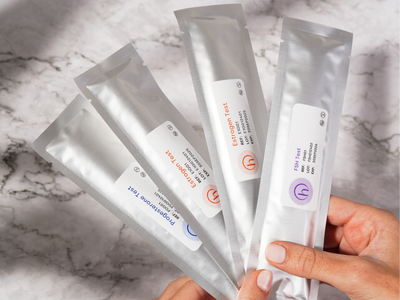
Tired, moody, cycle feeling off, or just curious? Test 3 key hormones at home with a simple urine test, get results in 15 minutes, and know what to do next.
- Painless, at-home urine test
- Quantitative results in 15 minutes
- Each result explained, your report after 3 cycles
-
12 months Hormona+ included with your first test purchase


Not sure which plan? Find your fit.
*Hormona helps you track hormone levels and symptoms.
It does not diagnose hormonal imbalances or medical conditions.


Estrogen


Progesterone


FSH


The 3 hormones running the show
Mood, energy, sleep, your period. Meet the hormones behind it all.
-
ESTROGEN
Energy, skin dryness and your whole cycle
Peaks just before ovulation and rises again in the second half of your cycle. That’s why your kit tests it twice each cycle. Shifts can show up as low energy, or changes in your hair and skin.
CAN RELATE TO
- Low energy
- Skin dryness
- Hair loss
- Low sex drive
- Appetite changes
-
PROGESTERONE
Sleep, mood and the second half of your cycle
Rises after ovulation, so your kit tests it once, in the second half of your cycle. Lower levels can be linked to irregular cycles, poor sleep or mood swings.
CAN RELATE TO
- Period changes
- Sleep problems
- Weight changes
- Mood changes
-
FOLLICLE-STIMULATING HORMONE (FSH)
How your ovaries respond, and changes with age
Helps start each cycle, so your kit tests it once, in the first days of your period. Tracking it over time can show shifts around your cycle.
CAN RELATE TO
- Hot flashes or night sweats
- Cycle length changes
4 steps. 15 minutes. Zero needles.
Test from your bathroom, scheduled around your cycle. The Hormona app tells you when to test and walks you through every step.
-

STEP 1
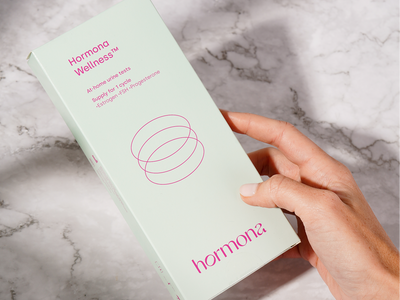
Order your kit and download the app.
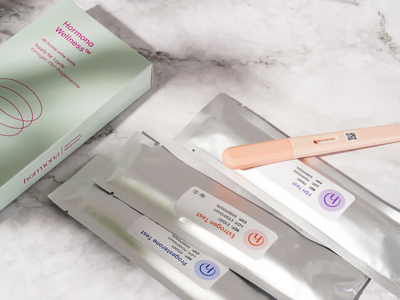
Each kit tests for Estrogen, Progesterone, and FSH. Activate it in the Hormona app.
-

STEP 2
The app tells you when to test
A personalized schedule tells you when and which hormone to test.
-

STEP 3
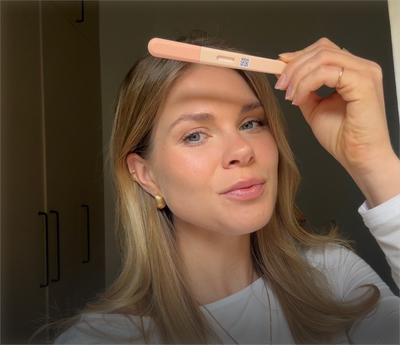
Dip, then wait 15 minutes
Use your first morning urine. The app times the wait, so you can get on with your morning.
-

STEP 4
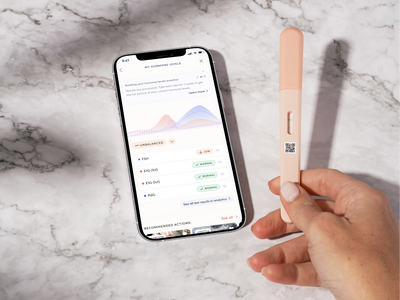
Scan with your phone
Hold the strip in good light and the app reads it. Your result appears right away.


More than a number
Every result tells you what it means for you, and what you can try next.
-
Your level, in context
Quantitative results, shown against where you sit in your cycle.
-
What it means for you
A clear, plain-language explanation with every result.
-
What you can try
Lifestyle tips for food, movement and sleep, backed by experts in women’s health.
-
Daily insights
What to expect from your body today, based on your cycle.
One cycle, three, or a whole year?
One cycle is a snapshot. Three show your pattern. Twelve show how it changes over time.
-
1 CYCLE
A first look
Best if you’re curious, or checking in.
- 4 tests across 1 cycle
- Your results in plain language
- Lifestyle tips for your results
£59
-
3 CYCLES
Your pattern
Best if something feels off, or you want your baseline.
- 12 tests across 3 cycles
- Everything in 1 cycle
- Your balance report, comparing your cycles.
£129
-
6 CYCLES
Your pattern
Best if something feels off, or you want your baseline.
- 24 tests across 6 cycles
- Everything in 3 cycles
- Your balance report, comparing your cycles.
£249
-
12 CYCLES
Change over a year
Best if you want to follow your hormones through a life stage or over the long term.
- 48 tests across 12 cycles
- Everything in 6 cycles
- See how changes you make move your numbers
£399
Your hormones rise and fall.
Hormona follows them.
A blood test captures one moment. Testing on key days, over several cycles, shows how your levels naturally move and what’s normal for you.

Across your cycle, not one day
Your hormones move up and down through the month. We test on key days, so you can see how your levels move, not a single snapshot.
Over several cycles, not one month
No two cycles are quite the same. Testing over three cycles or more shows your own pattern and what’s normal for you.
Notice when things shift
Tracking over time helps you see changes as they happen, like after coming off the pill, when navigating a stressful period or as you approach perimenopause.
HORMONA UNIQUENESS
Why our at home hormone test is different
Understand your hormones instantly. No blood tests. No labs. Just the facts, delivered to the comfort of your home and to the app.
| Hormona | Other urine trackers | Saliva testing | Blood test | |
|---|---|---|---|---|
| Sampling method | Urine Stable | Urine Stable | Saliva Volatile | Finger-prick Painful / Messy |
| Quantitative accuracy | Across the clinical range | At thresholds | At thresholds | Across the clinical range |
| Analysis method | iOS / Android | Extra device | iOS | Lab |
| Test from anywhere, globally | ||||
| For every life stage | ||||
| Real-time results | 3-5 days |

The Science behind our hormone testing kits.
Take your first step towards understanding your hormones
99%
of women report that hormones have a significant impact on their mood.
75%
of women report symptoms related to the fluctuation of hormones in the menstrual cycle.
87%
of women report that they feel misunderstood by their doctors.
* Statistics from the Hormona app.
Science-Backed Hormone Insights
Smartest technology
Advanced quantitative technology that accurately measures your hormone levels.
Timed to your cycle
Testing tailored to your cycle, so we can help you discover your hormonal trends.
Backed by experts
All the tools to analyze your hormones at home, backed by women’s health experts.
Who it’s for
Suitable for women of reproductive age with natural menstrual cycles.
Thousands of women.
Millions of data points.
We never have and never will share your individual health data.
Wherever you are, your data is protected under GDPR, one of the world's strictest privacy laws.
- 5.9m symptoms logged
- 435k total cycles
- 191 countries using Hormona
-
“The testing flow is very smooth, and it is unbelievable how fast you can see your results.”
-
“The suggestions of what to do (my E1G is high) afterwards were really helpful.”
-
“Doing lab tests regularly was not practical and was expensive... Hormona gave me the chance to test continuously.”
Your questions, answered
What can hormone testing tell me?
Hormone testing can help you understand how your body works in rhythm with your hormonal fluctuations. While popular online explanations of what to expect are easy to find, they describe the most common version of a cycle and do not necessarily apply to you.
How often should I test my hormones?
You can test for just a single cycle, however this may not answer the questions you have. Cycles vary, and you may happen to capture one without ovulation even if you ovulate regularly. This is why we recommend testing for at least 3 cycles: to establish your baseline and capture the differences between them. Testing over longer periods, such as 6 or 12 or more cycles, can help you see how travel, your school year, or work schedule affect how you feel, and track transitions from feeling great to feeling fatigued without a clear explanation.
How do I prepare for a Hormona urine test?
Your preparation starts the evening before. Try not to drink more than usual to avoid night-time trips to the bathroom, and place the test you plan to use along with a sample cap somewhere visible. In the morning, collect your first urine sample and test as soon as possible after collection, as hormone concentration decreases over time.
Which hormones does the Hormona Wellness Test measure?
Our tests measure three key hormones involved in women’s hormonal health: FSH, estrogen, and progesterone.
Estrogen is measured via it's urinary metabolite Estrone-3-Glucuronide (E1G) since it’s a urine-based testing method, enabling accurate estrogen testing at home without the need for blood samples. Similarily, Progesterone is measured via it's urinary metabolite Pregnanediol-Glucuronide (PdG), while for FSH there are no urinary metabolites.
Together, these measurements allow a comprehensive view of hormone patterns using a single at-home hormone testing kit, including an estrogen test at home as part of the wider hormone profile.
The kit is exclusively used with the app as it will let you know which hormone is due for testing. Once notified, all you have to do is follow the instructions in the app. Which means ensuring you’ve got the right test strip, collect your first morning urine sample, wait for the analysis, then scan your test to receive your result.
Test results will be stored on your app, and once you’ve tested for 3 cycles, your baseline hormone trend analysis is unlocked.
How accurate are the results?
Your results provide a numerical hormone value so you can monitor and compare levels over time. They are aligned with what is measured in the blood. While standard quantitative tests are designed to answer yes or no questions, our tests are designed to help you identify patterns over time.
Can I use the Hormona Wellness Test if I’m on hormonal contraception, don’t have a period, or am going through menopause?
Technically yes: there is a schedule-free flow in the app that allows you to choose which hormone to test, how many times, and when. To make the most of this, think about your specific goal and why you want to test, then contact our support team and explain your situation so we can recommend the right schedule for you. It is worth noting that the full Wellness solution is designed around the natural cycle and includes lifestyle tips and explanations of female physiology alongside hormone values. The schedule-free option does not yet have the same level of informational support, however you can discuss your results with an AI bot trained on Hormona data and insights.
What happens after I get my results?
You can access your results in the app immediately after scanning the test. You will first see the numerical hormone value, then a dashboard showing the overall picture of your hormone behaviour. If you log symptoms as you experience them, the analytics screen will help you spot patterns and potential links between cycle phases and hormone results. The Solution screen includes dietary suggestions, a community where you can ask questions and discuss your results, programs, and articles — all available to you at any time.

